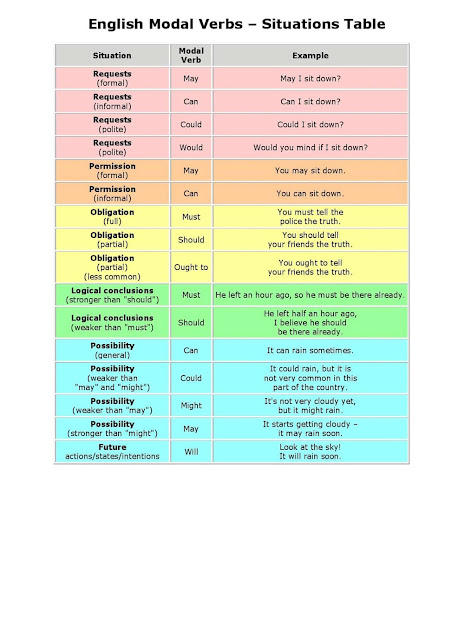
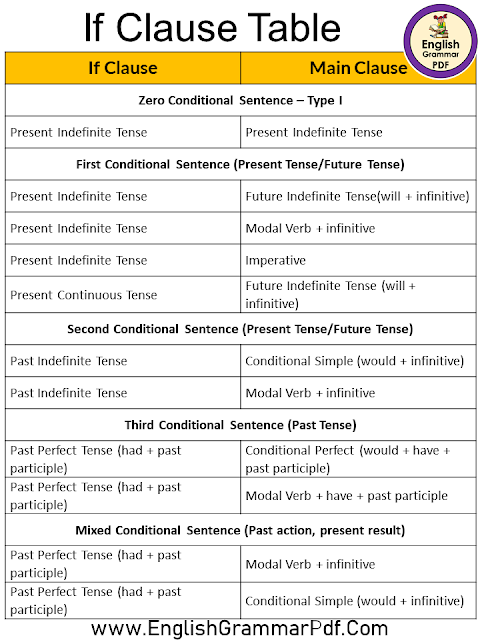
- VERBOS MODALES:
- VERBO “CAN”
El verbo 'Can' pertenece a los verbos modales y se ubica antes del verbo principal en infinitivo. Significa 'poder'. Se utiliza para expresar habilidad, permiso.
I can - puedo
Affirmative
·
· I can play the trumpet.
Yo puedo/sé tocar la trompeta.
· We can take a taxi to the airport.
Podemos tomar un taxi hasta el aeropuerto.
· Mary can be very stubborn sometimes.
Mary puede ser muy terca a veces.
· You can sit here if you like.
Puedes sentarte aquí si quieres.
· It can take longer than we thought.
(Esto) Puede tardar más de lo que pensábamos.
· Nobody can understand that.
Nadie puede entender eso.
· Your decision can change our lives.
Tu decisión puede cambiarnos la vida.
Negative
·
· I can not swim.
No puedo/sé nadar.
· That cannot be true.
Eso no puede ser cierto.
· You can't tell me what to do.
No puedes decirme qué hacer
Interrogative
·
· Can Peter speak German?
¿Puede/sabe Peter hablar alemán?
· Can you help me with my homework?
¿Me puedes ayudar con mi tarea?
Can + have
·
· Paul can have gone to Maria's.
Paul puede haber ido a lo de María.
· They can't have left without us.
Ellos no pueden haberse ido sin nosotros.
· Jane can't have said that.
Jane no puede haber dicho eso.
- VERBO “COULD”
El verbo 'Could' Expresa poca probabilidad o condicionalidad. Significa: podría, pude, podía, pudiera de acuerdo con el contexto: I could dance if I could practice.
I could - podría / pude / podía / pudiera
Affirmative
·
· You could be wrong.
Podrías estar equivocado.
· They could manage without us.
Ellos pudieron/podrían arreglárselas sin nosotros.
· I could help Ann if she only let me.
Yo podría ayudar a Ann si tan solo me dejara.
· This new plan could be very risky.
Este nuevo plan podría ser muy riesgoso.
· The news could kill Mr. Taylor.
La noticia podría matarlo al señor Taylor.
· Anybody could be chosen for the job.
Cualquiera podría ser elegido para el trabajo.
· I could go back and bring Kate with me.
Yo podría/pude volver y traer a Kate conmigo.
Negative
·
· I couldn't see very clearly.
Yo no pude/podría ver muy claramente.
· Mrs. Jones couldn't stand the smell.
La señora Jones no pudo/podría soportar el olor.
· We couldn't leave you alone.
No podríamos dejarte solo.
Interrogative
·
· Could you open the window?
¿Pudiste/podrías abrir la ventana?
· Could they escape?
¿Pudieron/podrían escapar?
Could + have
·
· You could have told me you weren't at home!
¡Podrías haberme dicho que no estabas en casa!
· It could have been worse.
Pudo/podría haber sido peor.
· John couldn't have done that.
John no pudo/podría haber hecho eso.
C. VERBO “MAY”
El verbo 'may' se utiliza para expresar cierto grado de probabilidad de una acción o grado de certeza: It may rain today. Significa: podría, quizás, puede que.
I may - podría / quizás / puede que
Affirmative
·
· We may stay here for the night.
Podríamos pasar la noche aquí.
· Jack may be telling the truth.
Puede que Jack esté diciendo la verdad.
· You may ask three questions.
Puedes hacer tres preguntas.
· I may visit Susan on Monday.
Quizás la visite a Susan el lunes.
· The road may be blocked.
El camino podría estar bloqueado.
· That may be a good idea.
(Esa) Quizá sea una buena idea.
· Carol may go when she finishes.
Carol puede/podrá ir cuando termine.
Negative
·
· Mr. Johnson may not remember anything.
Puede que el señor Johnson no recuerde nada.
· You may not leave the classroom without permission.
Usted no puede salir del aula sin permiso.
· I may not come next week.
Quizá no venga la semana que viene.
Interrogative
·
· May I go to the bathroom?
¿Puedo ir al baño?
· May you take this to Mr. Richards?
¿Podrías llevarle esto al señor Richards?
May + have
·
· Vicky may have told me.
Puede que Vicky me haya dicho.
· They may not have known that.
Puede que ellos no hayan sabido eso.
· I may have forgotten to lock the door.
Quizá me haya olvidado de cerrar la puerta con llave.
- VERBO “MIGTH”
El verbo 'might' expresa débil probabilidad o posibilidad. Se utiliza cuando queremos decir: podría, quizás, puede que (They might come tomorrow).
I might - podría / quizás / puede que
Affirmative
· ¡Error! Objeto incrustado no válido.
· They might be waiting for us at the station.
Podrían estar esperándonos en la estación.
· This might be our only chance
Esta podría ser nuestra única oportunidad.
· I might lose my job.
Podría perder mi trabajo.
· Harry might write soon.
Harry podría escribir pronto.
· You might find a solution.
Podrías encontrar una solución.
· We might be going the wrong way.
Quizás estemos yendo en la dirección equivocada.
· I might call you tomorrow.
Podría llamarte mañana.
Negative
·
· Sylvia might not live there anymore.
Quizás Sylvia ya no viva más ahí.
· We might not know everything.
Puede que no sepamos todo.
· It might not rain tonight.
Puede que no llueva esta noche.
Interrogative
·
· Might I give you a piece of advice?
¿Podría darte un consejo?
· Might we speak to you for a moment?
¿Podríamos hablar contigo un momento?
Might + have
·
· They might have finished earlier.
Quizás hayan terminado más temprano.
· Bob might have died in the accident.
Bob podría haber muerto en el accidente.
· Miss Green might not have been present at the time.
Puede que la señorita Green no haya estado presente en ese momento.
- VERBO “MUST”
El verbo 'must' expresa una prohibición u obligación fuerte así como cierta certeza: I must go. She must be crazy. En español significa debo, debo de.
I must - debo / debo de
Affirmative
·
· I must go to the library.
Debo ir a la biblioteca.
· You must stay here until I come back.
Debes quedarte aquí hasta que yo vuelva.
· We must be at the airport at three o'clock.
Debemos estar en el aeropuerto a las tres.
· Everybody must wear a uniform.
Todos deben usar uniforme.
· You must be joking!
¡Deben de estar bromeando!
· Julia must be in Paris by now.
Julia ya debe de estar en París.
· It must be noon already.
Ya debe de ser mediodía.
Negative
·
· You must not talk to strangers.
No debes hablar con extraños.
· We mustn't make noise.
No debemos hacer ruido.
· Mr. Williams must not smoke.
El señor Williams no debe fumar.
Interrogative
·
· Must we do everything today?
¿Debemos hacer todo hoy?
· Must you go so soon?
¿Debes irte tan pronto?
Must + have
·
· I must have fallen asleep.
Debo de haberme quedado dormido.
· Sally must have forgotten about the meeting.
Sally debe de haberse olvidado de la reunión.
· They must have sent it already.
Ya deben de haberlo enviado.
- VERBO “SHOULD”
Usamos 'should' para expresar grado de posibilidad o probabilidad, así como también para obligación débil. Significa: debería, tendría que. I should study.
I should - debería / tendría que
Affirmative
·
· You should tell Miss Baker the truth.
Deberías decirle la verdad a la señorita Baker.
· We should go to sleep.
Deberíamos ir a dormir.
· I should call my mother.
Debería llamar a mi madre.
· They should leave as soon as possible.
Ellos deberían salir lo antes posible.
· She should be doing her homework.
Ella debería estar haciendo su tarea.
· Ben should exercise more.
Ben debería ejercitarse más.
· It should be here.
(Esto) Debería estar aquí.
Negative
·
· You should not say that.
No deberías decir eso.
· Nick shouldn't be working.
Nick no debería estar trabajando.
· It shouldn't take long.
(Esto) No debería tardar mucho.
Interrogative
·
· Should I write Maggie a letter?
¿Debería yo escribirle una carta a Maggie?
· Should we worry?
¿Deberíamos preocuparnos?
Should + have
·
· Charlie should have consulted me.
Charlie debería haberme consultado.
· I shouldn't have eaten so much.
Yo no debería haber comido tanto.
· Danny and Paul should have waited for you.
Danny y Paul deberían haberte esperado.
- VERBO “OUGTH”
El verbo 'ought to' es igual al 'should' y expresa una obligación débil. Significa debería, tendría que.
I ought to - debería / tendría que
Affirmative
·
· Helen ought to be more careful.
Helen debería tener más cuidado.
· I ought to stay in bed.
Yo debería quedarme en la cama.
· We ought to go together.
Deberíamos ir juntos.
· They ought to be here already.
Ellos ya deberían estar aquí.
· You ought to eat more vegetables.
Deberías comer más vegetales.
· Tom ought to take her home.
Tom debería llevarla a casa.
· It ought to work properly.
(Esto) Debería funcionar correctamente.
Negative
·
· You ought not to drink so much.
No deberías beber tanto.
· They ought not to go camping without a torch.
Ellos no deberían ir de camping sin una linterna.
· George ought not to wear someone else's glasses.
George no debería usar los anteojos de otra persona.
Interrogative
·
· Ought Rachel to be here so early?
¿Debería Rachel estar aquí tan temprano?
· Ought they to live there?
¿Deberían ellos vivir allí?
Ought to + have
·
· You ought to have read the book for today.
Deberían haber leído el libro para hoy.
· They ought to have gone to the supermarket.
Ellos deberían haber ido al supermercado.
· We ought to have listened to the guard.
Deberíamos haber escuchado al guardia.
- VERBOS AUXILIARES:
- VERBO “WILL”
En inglés no existen los verbos en futuro, sino que al agregar will, convertimos en futuro al verbo que le sigue: I will come to see you tonight.
I will go - iré
I will eat - comeré
I will be - seré / estaré
I will have - tendré / habré
Affirmative
·
· Bill will finish this later.
Bill terminará esto después.
· This will be very easy.
Esto será muy fácil.
· I will call you back.
Yo te volveré a llamar.
· It will rain next week.
Lloverá la semana que viene.
· They will catch you if you stay.
Te atraparán si te quedas.
· We will go there the day after tomorrow.
Iremos allí pasado mañana.
· You will get lost in the city.
Te perderás en la ciudad.
Negative
·
· I won't sleep tonight.
No dormiré esta noche.
· They will not come.
Ellos no vendrán.
· You won't like it.
No te gustará.
Interrogative
·
· Will Mrs. Lennon understand me?
¿La señora Lennon me entenderá?
· Will you take me with you?
¿Me llevarás contigo?
Will + have
·
· Mr. Philips will have left by this evening.
El señor Philips se habrá ido esta noche.
· I will have finished the book by tomorrow.
Habré terminado el libro mañana.
· We will have eaten everything by next week.
Nos habremos comido todo la semana que viene.
- VERBO “WOULD”
'Would' es el pasado de will en algunos casos y verbo auxiliar en otros. Convierte en potencial al verbo que le sigue y va seguido del verbo en forma base.
I would go - iría
I would eat - comería
I would be - sería / estaría
I would have - tendría / habría
Affirmative
·
· I would go to the party.
Yo iría a la fiesta.
· You would feel better.
Te sentirías mejor.
· That would be great.
Eso sería genial.
· We would help you.
Nosotros te ayudaríamos.
· Joan would start to cry.
Joan comenzaría a llorar.
· Glenn would come right away.
Glenn vendría enseguida.
· They would get very angry.
Ellos se enojarían mucho.
Negative
·
· She would not be happy.
Ella no sería feliz.
· We wouldn't spend all the money.
No gastaríamos todo el dinero.
· I wouldn't do that.
Yo no haría eso.
Interrogative
·
· Would he give Patty a diamond ring?
¿Él le daría a Patty un anillo de diamantes?
· Would you mind?
¿Te importaría?
Would + have
·
· I would have picked you up.
Yo te habría pasado a buscar.
· We wouldn't have had enough time.
No habríamos tenido tiempo suficiente.
· Matt would have said he was sorry.
Matt habría dicho que lo lamentaba.